


jdace | Exploring the Fascinating World of Strategy Games
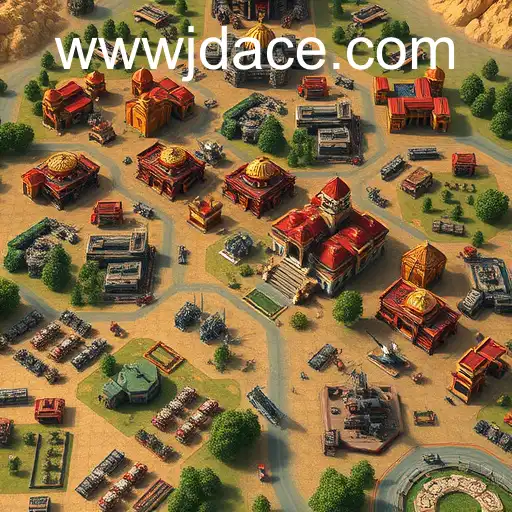
In the ever-evolving realm of video games, the strategy genre has carved out a significant niche for itself, captivating millions of players around the globe. As one of the most intellectually stimulating categories of gaming, strategy games challenge players to engage their foresight, planning, and judgment to outwit their opponents or navigate complex scenarios. The allure of strategy games lies in their ability to offer a unique blend of mental stimulation and entertainment, creating an experience that is as rewarding as it is challenging.
The landscape of strategy games is incredibly diverse, encompassing a wide array of sub-genres including real-time strategy (RTS), turn-based strategy (TBS), and grand strategy. Each of these sub-genres offers its own distinct mechanics and challenges. Real-time strategy games, like the iconic 'StarCraft,' demand quick thinking and efficient management of resources in a constantly changing battlefield, whereas turn-based strategy games such as 'Civilization' allow players more time to plan their moves, focusing on building long-term strategies.
One of the defining characteristics of strategy games is their emphasis on player choice and consequence. Unlike some other game genres where linear gameplay is prominent, strategy games often provide players with a sandbox environment. This freedom allows players to devise their unique pathways to victory, crafting strategies that reflect their personal playstyle. The aspect of player-driven decisions makes each game a distinct experience, with endless possibilities awaiting exploration.
Innovation within the strategy genre is relentless, with developers continually pushing the boundaries of what's possible. Modern strategy games often feature highly sophisticated artificial intelligence, rich narratives, and intricate mechanics that require deep strategic thought and planning. These innovations are particularly evident in games that utilize procedural generation or integrate advanced AI to offer challenges that adapt to the player's skill level, ensuring that veterans and newcomers alike can find enjoyment and challenge.
Another key element contributing to the popularity of strategy games is their capacity for multiplayer interactions. Games like 'Age of Empires' and 'Total War' have cultivated massive communities of players who thrive on the competitive aspects of multiplayer gameplay. Whether it's in the form of cooperative alliances or head-to-head battles, the multiplayer dimension adds a layer of depth and engagement that has drawn dedicated communities that thrive on shared experiences and competition.
As the world of gaming continues to expand, strategy games persist as a compelling genre that combines entertainment with intellectual challenge. From the complexity of their mechanics to the satisfaction derived from mastering them, these games offer lasting appeal. The keyword 'jdace' might not be intrinsically linked to these titles yet, but as digital landscapes evolve, it might find its place within the intricate networks of strategy-focused communities, representing a new chapter in the ever-growing canon of strategic gaming.
